One of the most widespread mistakes of amateur punters is that good odds are those that give them high chances of winning, and they will always bet on heavy favorites that have low payouts. In practice, odds assessment is all about detecting mathematical anomalies between the price set by the bookmaker, and the true statistical likelihood. With the idea of Expected Value in hand and the knowledge of how to make your bets with the well-known BK8 bookmaker, you can know how to see the really good odds and create a long-term, profitable betting portfolio.
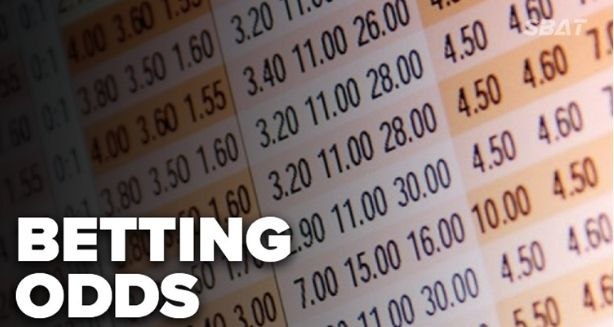
The basic deception: Bad odds are not good odds.
You have to learn to unlearn how sports betting is perceived by the general population in order to comprehend what good betting odds are. The average punter will consider a football game where Manchester City is at 1.15 to defeat a club that is under relegation. They reason, “Manchester City is virtually a sure winner, and 1.15 are good odds. This is mathematically unsound and is the main cause of billions of dollars being made annually by bookmakers.
The odds of 1.15 imply a probability of 86.9. When you make a consistent bet of 1.15 odds, you would have to win 87 out of 100 bets to break even. You are losing money when you win 86 out of 100 bets. Sports are about upsets; red cards, controversial penalties, and freak injuries are bound to happen. Over a large sample size, betting on heavy favorites with negative value will mathematically bankrupt your bankroll. Good odds are not regarding safety, but regarding price accuracy.
The ultimate basis of determining good betting odds is the difference between implied probability and true probability.
Each and every group of odds provided by a sportsbook can be transformed into a percentage, the implied probability. The calculation of the decimal odds is easy: (1 / Decimal Odds) x 100. In the case of a tennis player with odds of 2.00 (Evens) offered by a bookmaker, the implied probability is (1 / 2.00) x 100 = 50%. The bookmaker is essentially saying this player has a 50% chance of winning.
“True probability,” on the other hand, is the actual, real-world mathematical chance of that event occurring, completely devoid of the bookmaker’s profit margin or public betting bias. You have to compute your own true probability, whether by statistical model, algorithm, or deep sports knowledge, and compare it to the implied probability of the bookmaker, to find good odds.
Defining Good Odds: The idea of positive expected value +EV.
Good betting odds are merely those odds that have Positive Expected Value +EV. An opportunity is rated as +EV when you have a higher true probability of an event happening than the implied probability of the event happening in the odds of the bookmaker.We shall consider a practical case. Imagine that you are breaking down a forthcoming basketball match in the NBA. The underdog has odds of 3.00 with the bookmaker.The Bookmaker’s Implied Probability: (1 / 3.00) * 100 = 33.3%. The sportsbook thinks that the underdog will win 33.3 percent of the time.Your Real Probability: Your statistical model, based on an analysis of advanced metrics, injury reports, and tactical matchups, concludes that the underdog actually has a 45% probability of winning the game. Since your actual probability (45%) is far greater than the implied probability (33.3) of the bookmaker, odds of 3.00 are unusually good odds. You make this bet not because the underdog has a good chance of winning, (they will still lose 55% of the time), but because the reward will mathematically compensate you the risk you take. Variance is balanced over hundreds of +EV bets, and the mathematics assure a long-term profit plans to always get good odds. Identifying +EV opportunities involves discipline, research and knowledge of sportsbook operations. Bookmakers are not infallible; they commit pricing errors, and they willingly manipulate odds depending on the actions of the crowd.
Taking advantage of popular prejudice and market panics.
Bookmakers are interested in balancing their liability i.e. they would like to have an equal amount of money bet on both sides of a market. When the common people are betting heavily on a well-known, popular team (such as the Los Angeles Lakers or Real Madrid) the bookmaker will artificially reduce the odds of the favorite and increase the odds of the underdog.
This sets a situation in which odds on the underdog are biased in terms of finances and not in terms of reality. These overreactions are sought by a shrewd investor. A successful BK8 deposit will give you the lightning-fast execution to track line dynamics and bet when the odds of an underdog change between 2.50 and 3.20. This gives you an opportunity to hedge artificial inflation and transform a typical bet into a money-making, +EV investment.
Shopping around on various sportsbooks.
Various book makers have different algorithms and serve various customers. Therefore, the odds for the exact same event will vary from platform to platform. The easiest methods of making sure that you are getting good odds is by shopping in a line.
The good odds, how to find them.
When your model is that you have to bet over 2.5 goals in a particular football match, you will need to get the best price possible. Assuming that Sportsbook A has 1.85 and Sportsbook B has 1.95 on the same result, it will be mathematically irresponsible to bet at Sportsbook A. The variation between 1.85 and 1.95 may not be big when taking one hundred dollars of bet, but when this is multiplied by 1,000 bets in a season, it is thousands of dollars of lost value. Good odds are always the absolute highest market price at any particular time.
Conclusion
To know what good betting odds are, there has to be a fundamental change to pursue mathematical value. The only way to be a successful bettor is to place bets only when the payoff is more than what you have calculated. With a consistent finding of Positive Expected Value ( +EV ) and a selection of BK8 betting based on the best prices, you take your sports betting off the recreational gamble level and turn it into a highly calculated financial plan.